
Lab Grown Diamond Price Guide: What Affects the Cost?
Lab grown diamonds have changed the way people buy fine jewellery. They offer the same beauty, durability, and brilliance as natural diamonds but at a more affordable price. Still, many buyers ask an important question before purchasing: what actually affects the price of a lab grown diamond?
CVD DIAMOND | LAB-GROWN DIAMONDS | LUXICA JEWELS
CVD Diamond
2 min read
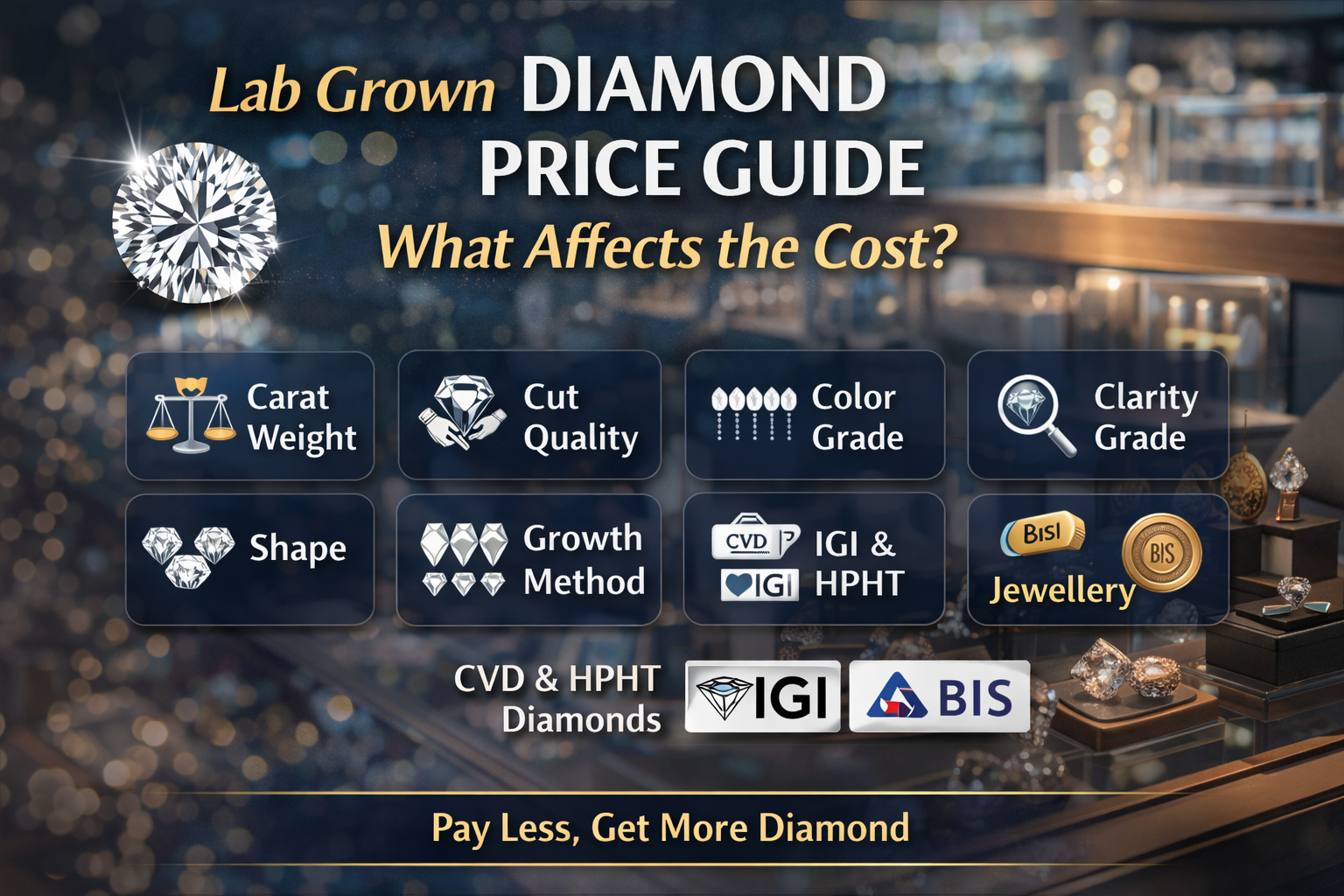
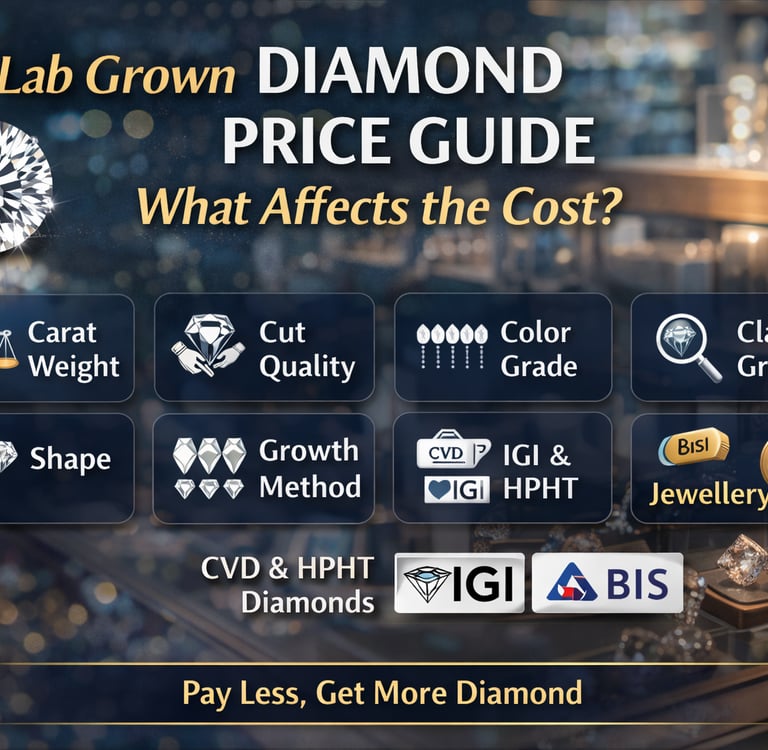
Lab Grown Diamond Price Guide: What Affects the Cost?
Lab grown diamonds have changed the way people buy fine jewellery. They offer the same beauty, durability, and brilliance as natural diamonds but at a more affordable price. Still, many buyers ask an important question before purchasing: what actually affects the price of a lab grown diamond?
This guide explains the key factors that influence lab grown diamond prices, helping you make a confident and informed decision.
What Is a Lab Grown Diamond?
A lab grown diamond, also known as a lab created diamond, CVD diamond, HPHT diamond, lab diamond, or man made diamond, is a real diamond grown in a laboratory using advanced technology. These diamonds are chemically, physically, and optically identical to mined diamonds.
The difference is not in quality, but in origin and price.
1. Carat Weight
Carat weight plays a major role in determining the price of a lab grown diamond.
Higher carat diamonds cost more overall
Price per carat increases as size increases
Lab grown diamonds offer better value per carat than natural diamonds
Because lab diamonds are more affordable, buyers often choose a larger carat size within the same budget.
2. Cut Quality
The cut of a diamond directly affects its brilliance and sparkle.
Excellent or Ideal cuts reflect light better
Poorly cut diamonds appear dull even if they are large
Well-cut lab grown diamonds are priced higher due to superior light performance
Cut quality is one of the most important factors influencing visual beauty.
3. Color Grade
Lab grown diamonds are graded on the same color scale as natural diamonds, from D to Z.
D, E, and F grades are colorless and cost more
Near-colorless grades like G and H offer better value
Slight color differences are often invisible to the naked eye
Choosing the right color grade helps balance beauty and budget.
4. Clarity Grade
Clarity refers to internal inclusions and surface blemishes.
Higher clarity means fewer imperfections and higher price
Lab grown diamonds often have better clarity due to controlled growth
VS and SI grades provide excellent appearance at lower cost
Most inclusions are microscopic and not visible without magnification.
5. Diamond Shape
The shape of a lab grown diamond also affects its price.
Round diamonds are usually the most expensive
Fancy shapes like oval, pear, emerald, cushion, and princess cost less
Fancy shapes offer better size appearance for the price
Choosing a non-round shape can significantly reduce overall cost.
6. Growth Method: CVD vs HPHT
Lab grown diamonds are created using two main methods.
CVD diamonds are grown using carbon-rich gas in a controlled chamber
HPHT diamonds are grown under high pressure and high temperature
In most cases, CVD and HPHT diamonds are priced similarly. The final cost depends more on quality factors like cut, color, clarity, and carat rather than the growth process itself.
7. Certification
Certification is a critical factor in pricing and trust.
IGI-certified lab grown diamonds carry higher credibility
Certification confirms diamond quality and authenticity
Certified diamonds usually cost more but offer long-term value
Always choose certified lab grown diamonds to avoid quality uncertainty.
8. Jewellery Type and Craftsmanship
When lab grown diamonds are set into jewellery, the final price also includes:
Metal type such as gold or platinum
Design complexity
Manufacturing and finishing quality
BIS hallmarking for jewellery purity
Custom-made jewellery may cost slightly more but offers better personalization.
Why Lab Grown Diamonds Are More Affordable Than Natural Diamonds
Lab grown diamonds typically cost 30 to 40 percent less than natural diamonds of the same quality because:
No mining costs
Shorter supply chain
Controlled production
Transparent pricing
Despite the lower price, they maintain the same hardness, fire, brilliance, and durability.
Ethical elegance, certified! Shine responsibly with IGI / SGL & BIS Hallmark assurance, piece after precious piece.
Connect US
Stay Connected